
Herringbone vs chevron flooring: what's the difference?
Herringbone and chevron floors look similar at first glance. Here's how to tell them apart, which suits your room, and what each costs to lay.
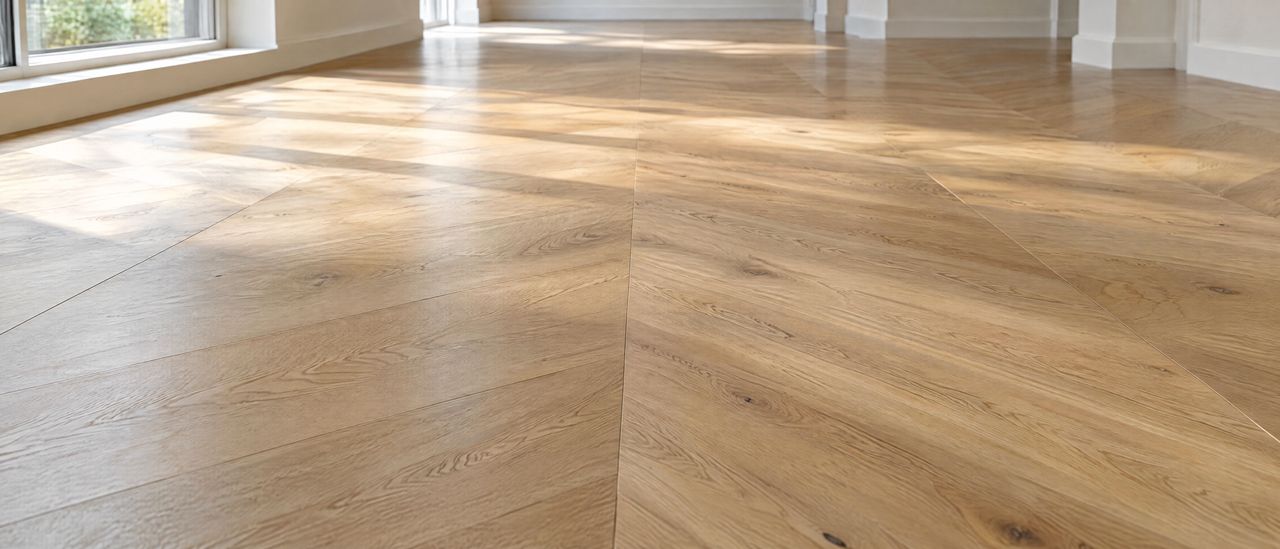
Herringbone and chevron are two of the most popular patterns for wood and wood-effect floors right now, and they're often confused. Both use rectangular blocks laid in a zigzag. The difference is in how the ends of the blocks meet.
The quick way to tell them apart
Herringbone
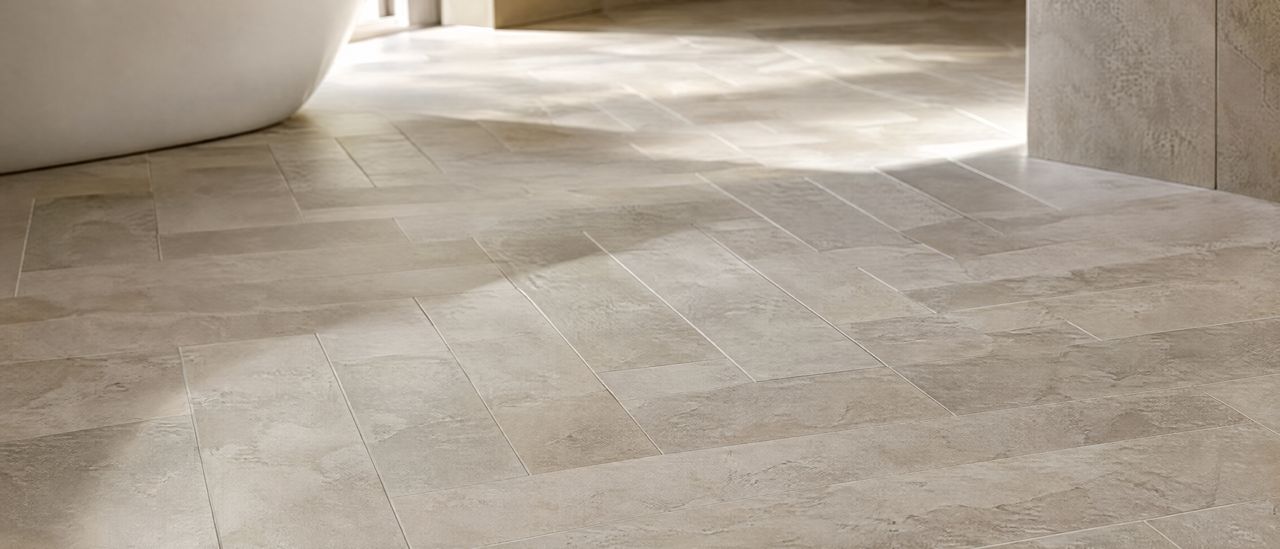
In a herringbone floor, the blocks are cut square at the ends. Each block butts up against the side of the next one, so the pattern has a slightly staggered, woven look. The "points" of the zigzag are stepped rather than sharp.
Chevron
In a chevron floor, the ends of the blocks are cut at an angle, usually 45 degrees, so they meet in a clean, continuous point. The result is a crisp line of arrows running down the room.
Which one suits your room?
- Herringbone has a more traditional, textured feel. It works beautifully in period homes, hallways and living rooms, and it hides small variations in the room's shape well.
- Chevron feels more modern and directional. It draws the eye along the room, which makes it a good choice for long, narrow spaces such as hallways and open-plan extensions.
Both look best when the pattern runs along the longest line of the room, or towards the main window or door.
Wood, wood-effect tile or LVT?
You can have either pattern in several materials:
- Engineered oak is the classic choice. It has a real wood top layer on a stable core, so it copes with underfloor heating better than solid wood.
- Wood-effect porcelain tile is ideal for kitchens, bathrooms and anywhere that gets wet or heavy wear.
- LVT (luxury vinyl tile) is warmer underfoot, quieter and usually the most affordable way to get the look.
Does it cost more than a straight-laid floor?
Yes. Both patterns take longer to set out and involve far more cutting at the edges of the room, so labour costs more than for straight planks. Chevron blocks also tend to cost more to buy, because the angled ends are cut at the factory.
As a rough guide, expect the laying cost to be 30 to 50 per cent higher than for a standard straight-laid floor of the same material. The subfloor also needs to be flat and sound, because any unevenness shows up quickly in a patterned floor.
Getting it right
The secret to a great herringbone or chevron floor is the set-out. The pattern needs to be centred on the room, square to the main walls, and planned so the cuts at the edges are even rather than leaving thin slivers by the door.
We plan every patterned floor before the first block goes down. If you're weighing up a new floor, see our tiling and flooring work or get a guide price.
Thinking about a project like this?
See a guide price in a couple of minutes, then we'll come and measure up for free.